• 100% Authentic watches
  • Safe delivery or pick-up
  • Warranty & easy returns
Our collection

An In-Depth Look at the History of Dive Watches

Dive watches are more than just rugged wristwear, they are milestones in engineering that trace the evolution of underwater exploration. From Rolex’s pioneering Oyster case in the 1920s to Omega’s Ultra Deep with a mind-bending 6.000-meter rating, the history of dive watches is steeped in innovation, military utility, and design breakthroughs. Seiko revolutionized the field with Japanese ingenuity, introducing helium-proof designs and depth sensors, while Blancpain and Squale forged a behind-the-scenes legacy in military-grade builds. This article dives into the transformative milestones, influential brands, and forward-looking technologies that have shaped the world of dive watches.

The Birth and Evolution of Dive Watches

The Inception of Water-Resistant Watches

Dive watches trace their origins to early waterproof innovations. In 1926, Rolex patented the Oyster case with a screw-down crown and caseback, ensuring a sealed environment. A year later, Mercedes Gleitze wore it while swimming the English Channel, proving its functionality. Omega followed in 1932 with the Marine, using a double-latched case tested to 135 meters.

In the 1930s, Panerai developed luminous watches using Rolex movements and radium paint for the Italian Navy. These early models prioritized visibility and legibility underwater. By World War II, waterproof watches were essential for military frogmen and reconnaissance divers.
The Rise of Saturation Diving Watches

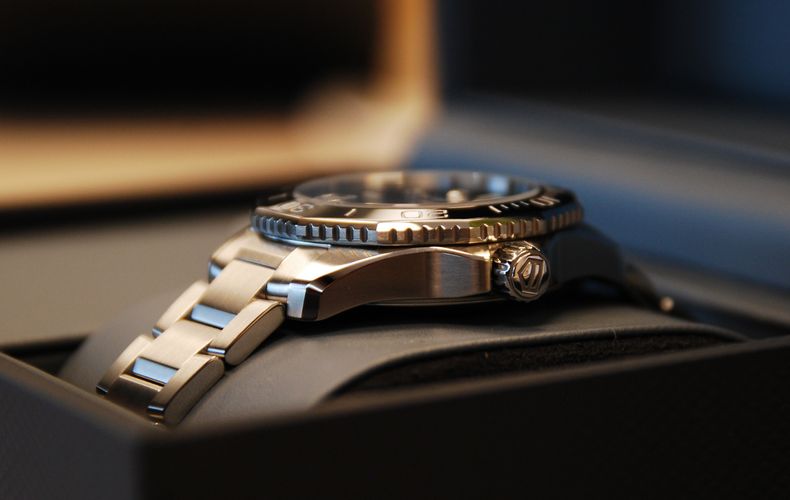
Saturation diving introduced new demands in the 1960s. Divers in hyperbaric chambers experienced helium infiltration into watch cases, causing crystals to dislodge during decompression.

To solve this, Rolex developed the helium escape valve for its Sea-Dweller model in 1967. Omega's 1970 PloProf took another approach, using a monobloc case design rated to 600 meters.

Seiko pushed depth limits in 1983: its Professional Diver’s 600m survived 1,062 meters of pressure testing. Their unique helium-impermeable crystal removed the need for an escape valve.

Notable Brands in Dive Watch History

Rolex: Defining the Modern Dive Watch

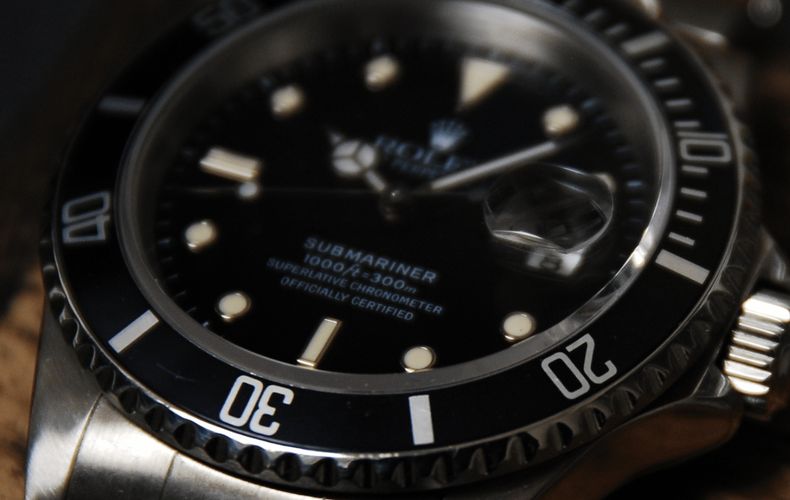
The Rolex Submariner, introduced in 1954, was among the first wristwatches explicitly built for diving. It included a 60-minute unidirectional bezel for tracking dive time, high-contrast luminous hands and indices, and a robust waterproof case rated to 100–200 meters. It was worn by the British Royal Navy and cemented its iconic status through appearances in early James Bond films. Rolex continued pushing technical limits, unveiling the Sea-Dweller with a helium escape valve and later the Deepsea, rated to 3.900 meters.

In 2022, Rolex launched the Deepsea Challenge, a full titanium model rated to an astonishing 11.000 meters, capable of withstanding the pressure of the Mariana Trench. These timepieces have become benchmarks of reliability and status both in and out of the water.

Seiko: Pioneering Japanese Dive Watch Technology

Seiko launched Japan’s first diver’s watch in 1965 with a 150-meter water resistance rating. Responding to feedback from professional divers, it developed:

  • The first 600m saturation diving watch with a titanium case (1975)
  • The first ceramic-cased 1.000m diver’s watch
  • Quartz and kinetic diver’s watches with built-in depth sensors and alarms

Seiko's innovations include the accordion-style band, screw-down crowns at 4 o’clock, and helium-impermeable gaskets. The brand also helped define ISO 6425 standards.

Omega: Engineering for Extreme Depths

Omega’s dive innovations began with the Marine in 1932 and expanded with the Seamaster line. Key contributions include:

  • The 1970 Seamaster PloProf (rated to 600m)
  • Anti-magnetic movements and ceramic bezels
  • The Planet Ocean Ultra Deep (2023), certified to 6.000 meters

Omega combined utility with mainstream appeal through its James Bond collaborations, reinforcing the Seamaster’s reputation.

Blancpain and Panerai: Foundational Yet Underrecognized

Blancpain’s Fifty Fathoms, released in 1953, defined many of the dive-watch standards still in use today. It featured a unidirectional bezel, automatic movement, and water resistance to 91 meters, exactly fifty fathoms. It was issued to the French Navy and favored by Jacques Cousteau’s diving team. Behind the scenes, Swiss case maker Squale played a vital role. In the 1950s and 1960s, Squale produced cases for Blancpain, including for the Fifty Fathoms and variants like the MC4 and Waltham models.

Their collaboration deepened in the 1970s with the military-spec “Bund” Fifty Fathoms, made for German combat divers. Some models were even double-signed with both brands, a testament to Squale’s influence. Although the formal partnership ended when Blancpain brought case production in-house, Squale’s craftsmanship left a lasting imprint and occasionally resurfaces in vintage-styled modern releases.

Panerai’s legacy also began in the 1930s, supplying oversized, luminous watches to the Royal Italian Navy. Using Rolex movements and radium-based paint, Panerai prioritized underwater legibility. The Radiomir, with its signature cushion case and wire lugs, became a staple for military frogmen.

In the 1950s, the Luminor case introduced a distinctive crown guard and improved water resistance. Long shrouded in military secrecy, Panerai transitioned into civilian markets in the 1990s, quickly earning cult status. Today, its designs echo their utilitarian origins while appealing to collectors and enthusiasts who value bold aesthetics and historical pedigree.

The Impact of Japanese Technologies on Dive Watches

Japanese watchmakers, especially Seiko and Citizen, introduced technological enhancements that expanded the capabilities of dive watches:

  • Quartz and kinetic movements for energy efficiency
  • Analog depth gauges with log memory (Scuba Master)
  • Spring Drive technology offering ±1-second accuracy per day
  • Use of titanium and ceramic for lightweight strength

These developments provided divers with multifunctional tools suitable for harsh marine conditions. Seiko’s saturation tests and government expedition endorsements validated their watches’ durability.

Future Directions in Dive Watch Technology

Despite the dominance of digital dive computers, mechanical dive watches remain relevant and are evolving in new directions. Brands are increasingly integrating smart features such as GPS synchronization, health and depth tracking, and emergency alerts, all while retaining analog aesthetics.

Environmental responsibility is shaping material choices too, with several manufacturers using recycled ocean plastics, bio-sourced straps, or titanium cases for durability with minimal weight. Technologically, materials like Liquidmetal, ceramic bezels, and ultra-tough sapphire crystals are enhancing legibility and scratch resistance.

Movement innovation continues with hybrid calibers like Seiko’s Spring Drive, merging quartz precision with mechanical heritage. Meanwhile, dive watch brands are embracing their maritime roots by funding marine conservation and ocean research programs, signaling a future where heritage, innovation, and sustainability coexist.

Summary Highlights

  • The Rolex Submariner was one of the first dive watches with a rotating bezel and 200m rating.
  • Seiko created the first helium-impermeable saturation diving watch using titanium.
  • Omega’s Ultra Deep holds one of the highest commercial depth ratings at 6.000 meters.
  • Blancpain’s Fifty Fathoms (1953) defined many dive-watch features still used today.
  • ISO 6425 sets the standard for certified diver watches, requiring 100m resistance and durability tests.

Dive watches have gone from utility gear to style staples without losing their edge. Brands like Rolex, Seiko, Blancpain, and Panerai built legacies underwater but thrived because they kept evolving. Whether you're chasing depth records or just like your gear with a backstory, these watches still make a serious splash.

Wristler

Keep track on luxury watch trends & releases

  • First access to exclusive watches on Wristler
  • What to consider for your purchase
  • Latest watch trend reports

Copy the link below to click one of the platforms below.

  • 100% Authentic watches
  • Safe delivery or pick-up
  • Warranty & easy returns