• 100% Authentic watches
  • Safe delivery or pick-up
  • Warranty & easy returns
Our collection

The Watch Case: Parts, Shapes & Materials Explained

A watch case is one of the most crucial parts of a watch. It defines a timepiece’s vibe, shields the inner workings, and decides how the thing actually feels on your wrist. Whether you’re into vintage watches, modern divers or handy tool watches, it doesn’t hurt to know your way around a watch case. We’ll break down what matters: components, shapes, materials and more.

What exactly is a watch case?

A watch case is the outer shell that houses and protects the internal components of a watch, including the movement, dial, and hands. It can be made from materials like stainless steel, titanium, ceramic, or gold and is critical for durability, water resistance, and overall design.

Think of the case as your watch’s suit of armor: sleek, functional, and, when done right, a work of design in its own right. It guards the dial and movement from dust, knocks, and water. But it also sets the visual tone: chunky or slim, brushed or polished, stealthy or showy. And let’s not forget the wrist feel. A case’s thickness, curve, and lug-to-lug stretch can make or break everyday wearability.

Breaking Down the Parts of a Watch Case

Case Body / Middle Case

This is the watch’s backbone. It houses the movement and often connects to the lugs. The case body defines the shape: round, square, cushion, and it’s where brand DNA usually shows up. It’s also the main contributor to size, weight, and wrist presence. More on shape quirks later.

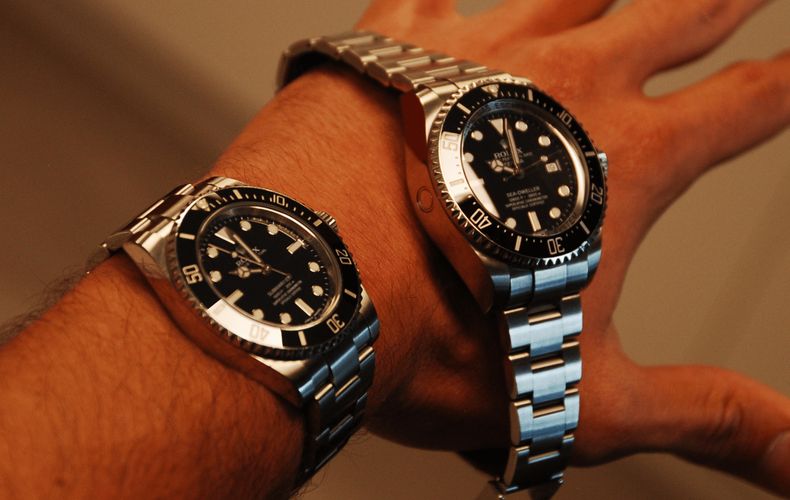
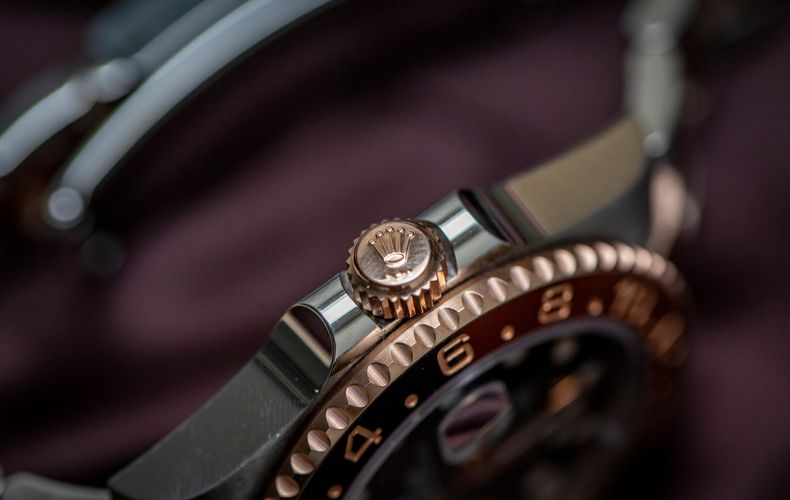
Bezel

A bezel is the ring that surrounds a watch’s dial and secures the crystal in place. It can be fixed or rotating and often serves functional purposes, such as measuring elapsed time or tracking a second timezone. Bezels are typically made from metal or ceramic for durability and clarity. Fixed or functional, the bezel’s finish and geometry can elevate a design or keep things low-key.

Crystal

This is your dial’s front-line defense. Acrylic is old-school and charming but scratches easily. Mineral glass is tougher, but not invincible. Sapphire is the go-to for modern luxury. Virtually scratch-proof and sharp-looking under light. Some watch brands also use an anti-reflective coating on the glass, like Breitling. It helps you read the dial (and time) in any light.

Case Back

Flip the watch and you’ll find either a solid back (tool watch vibes) or an exhibition case back that shows off the movement, the open case back. Some are snap-on, others screw in. You’ll usually see branding, specs, and sometimes, if you're lucky, a bit of storytelling etched into the metal.

Did you know there are even case backs that have both an open and closed caseback? The so-called flap over caseback is rarely seen, but extremely cool. Usually found on older watches, limited runs, you can have both a see-through caseback and a flip-over which covers that. Best of both worlds.

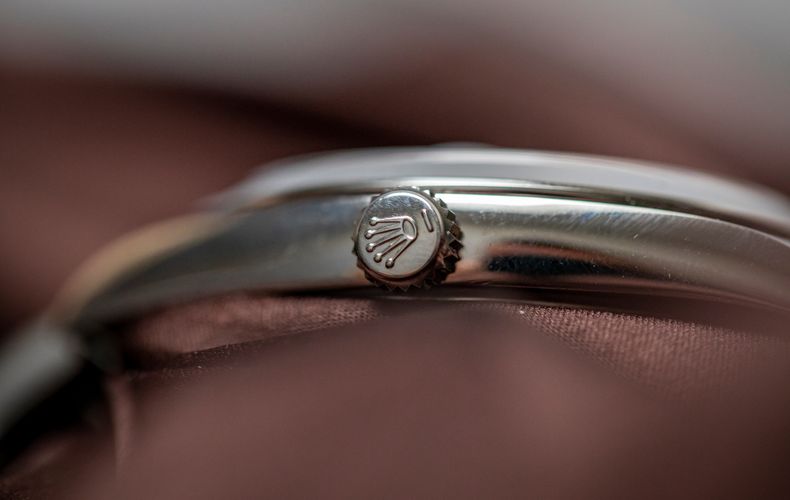
Crown

That little knob at 3 o’clock (or sometimes 4 or even left-handed at 9) is more important than it looks. You use it to wind and set the watch, and in sports models, it often screws down to keep water out. A good crown has tactile feedback and, ideally, a bit of stylistic flair.

There's so much more to tell. We even wrote a whole article about the crown.

Crown guards

Not every watch has them, but when they do, you know it. Think metal shoulders flanking the crown, built to take hits and block accidental tweaks. You’ll see them on dive and sports models. They can be integrated in the case (think Rolex Submariner) or external like with Panerai.

More info and examples on crown guards can be found in our article about them.

Pushers

Found on chronographs and other watch complications, pushers control extra functions like stopwatches or calendar tweaks. On dive-ready chronos, they’ll sometimes screw down too. Bonus points if they click like a Leica shutter.

Gaskets

Rubber or synthetic rings you’ll never see but should be thankful for. They sit behind the crown, under the crystal, around the case back, all working to keep water and dust out. Gaskets degrade with time and use, so routine servicing matters.

Lugs

These little arms connect your case to your strap or bracelet. Lug width (in millimeters) determines what fits. Lug-to-lug length matters for comfort. Wide-set lugs can make a smaller case wear bigger and vice versa. There are so many types of lugs, that we created an article about it.

Rehaut (Flange)

That sloped ring between the dial and the crystal. Sometimes it holds minute markers. Sometimes it’s a design flourish. Occasionally engraved with serial numbers or branding. For example Rolex’ serials are found in the rehaut.

Watch Case Shapes and most iconic examples

Watch cases come in all flavors, but a few shapes dominate for good reason.

Round is the old faithful: clean, versatile, and easy on the eyes. It’s also the most movement-friendly. Rolex’s Oyster case, launched in 1926, is the blueprint for waterproof round cases and still underpins every Submariner, Explorer and other Rolex models today.

Square and rectangular cases tend to lean dressy, but with edge. The Cartier Tank delivers Art Deco elegance in a tidy package. Meanwhile, the TAG Heuer Monaco shook up the racing scene with its bold square silhouette, and that unforgettable Steve McQueen wrist shot in Le Mans.

We've listed the top popular square & rectangular watches for you

Cushion cases offer a softened rectangle vibe with real wrist presence. The Panerai Luminor owns this space with its chunky case, clean dial, and crown bridge, balancing military grit with modern swagger.

Tonneau (barrel-shaped) cases are sleek, modern, and a little under-the-radar unless you’re talking Richard Mille. His futuristic takes, using carbon fiber and skeletonized dials, push the form into sci-fi territory with performance to match.

And then there’s the Audemars Piguet Royal Oak: the octagonal bezel, integrated bracelet, and slim profile changed the game in the '70s. It’s sport-luxury personified, and arguably the most recognizable case design on the planet.

Are all watch cases waterproof?

Not quite. Many watches have some water resistance, but that doesn't mean you should jump in the pool with your dress piece. The real line is drawn by gaskets, screw-down crowns, and case back engineering. Dive watches are built for it. Most others check the depth rating and respect it. Also, gaskets wear out. A pressure test now and then won’t hurt.

Watch Case Materials: The Usual Suspects

Stainless steel is the go-to: tough, corrosion-resistant, and age-proof. Titanium? Lighter and hypoallergenic but prone to scuffs. Bronze and brass bring vintage charm and develop patina over time. Ceramic is scratch-resistant and smooth but brittle. Carbon fiber and forged carbon lean modern, lightweight, and tech-forward. And if you’re going full flex: gold or platinum, because why not?

Men's vs. Women's Watch Cases

Watch sizing? Forget the old rules. These days, it’s less “his and hers,” but more “what fits, fits.” Some wrists love a 36mm. Others rock a 44.

Vintage pieces knew the deal, 36mm was standard fare, and that silhouette’s making a comeback for good reason. It wears easy, feels right, and looks sharp on pretty much anyone.

Personally? I’m all in on the 34-37mm range. Sleek without shouting. Big enough to make a point, small enough to stay classy. Bottom line: your wrist doesn’t care what the tag says. Try it on. If it sings, it’s yours.

A solid watch case is where craftsmanship meets character. It’s the part that gets scratched, admired, sweated in, and talked about at the bar. Learn what makes a case tick, and you’ll never look at your wrist the same way again.

Wristler

Keep track on luxury watch trends & releases

  • First access to exclusive watches on Wristler
  • What to consider for your purchase
  • Latest watch trend reports

Copy the link below to click one of the platforms below.

  • 100% Authentic watches
  • Safe delivery or pick-up
  • Warranty & easy returns