 100% Authentic watches
 Safe delivery or pick-up
 Warranty & easy returns





Tudor Submariner








We’ll keep
an eye on it
We’ll notify you of new matches
Tudor Submariner, the insider dive icon with serious watch history
If you want the essence of a classic dive watch without shouting, the Tudor Submariner is quiet authority. Launched in the 1950s and discontinued in the 1990s, it evolved from a straightforward tool into a luxury watch with real-world credibility. It benefited from the Rolex halo while building its own character, which is why collectors view it as the thinking person’s alternative to a household name. That blend of pedigree, practicality, and personality is the appeal: a watch that earned respect through decades of reliable service rather than hype.
The model family started as a no-nonsense waterproof instrument and refined itself with each era. Early no-date purity gave way to the Prince Oysterdate’s practicality, while case profiles, crown guards, and dials steadily improved. If you want the Submariner vibe that works everywhere, just a touch more relaxed and attainable, this is the lane. It became a collector staple on consistency and function, not theatrics, and that understatement remains its signature.
Design language across decades
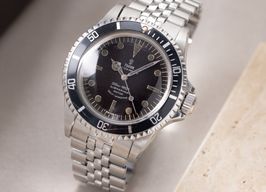
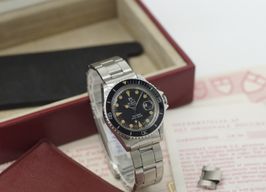
The identity centers on stainless steel cases, a rotating bezel with aluminum insert, and that unmistakable Sub silhouette. The earliest No Crown Guards and Big Crown variants feel purpose built. The 1960s ushered in Pointed Crown Guards and later Square Crown Guards, followed by more rounded protectors as ergonomics matured. Bezels kept clear minute scales and, in period, were often bidirectional. The overall look fits comfortably from the 1960s through the 1980s and still reads right today.
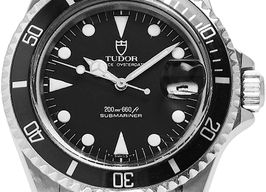
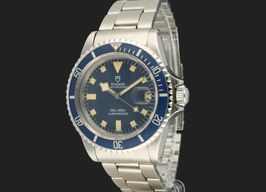
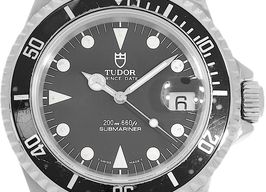
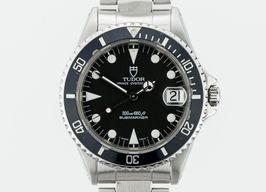
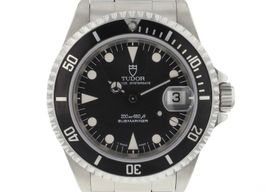
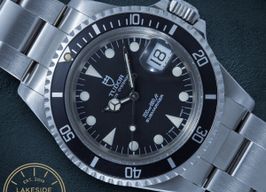
Dials are where the Tudor Submariner finds its voice. Gilt printing in the 1950s and 1960s gave way to matte executions as tool-first legibility took priority. Logo transitions matter: Big Rose and Small Rose dials mark earlier eras, while the Shield logo signals a newer chapter. Hands evolved too, Mercedes and straight hands on early pieces, then the late-1960s and 1970s Snowflake hands with matching square indices. Occasional lollipop seconds add charm. Black dials dominate, while blue Snowflake variants created a cult colorway that feels sporty and slightly rebellious.
The hardware supports the utilitarian brief. Acrylic and plexiglass crystals appeared first; sapphire crystal arrived later for extra durability. Bracelet choices followed the era and parts bin, from rivet bracelets to various Oyster styles. The net effect is a cohesive, legible, and highly wearable dive watch that avoids bloat and still feels contemporary in a world of overbuilt cases.
Movements, function, and why it matters
Under the caseback, the approach is sensible. Automatic calibers with self-winding convenience are the norm, and the brand’s long reliance on ETA architecture made these watches straightforward to service and resilient in daily use. That serviceability is a key reason many owners wear their Tudor Submariner regularly instead of treating it like a museum piece. Across decades you will find both no-date references with balanced symmetry and date models with practical calendar utility.
As a dive watch, the formula stays honest: waterproof cases, clear timing bezels, and high-contrast dials. It remains an instrument first and a luxury object second, which is exactly why it works. On an Oyster bracelet it can dress up; on a rivet bracelet it leans vintage; on a strap it goes casual without losing confidence.
Snapshot specs
- Type: dive watch with tool-watch lineage, discontinued in the 1990s with roots in the 1950s
- Materials: stainless steel cases, aluminum bezel inserts, acrylic or plexiglass crystals transitioning to sapphire
- Dial and hands: gilt and matte dials; Big Rose, Small Rose, and Shield logos; Mercedes and straight hands; Snowflake hands with square indices; occasional lollipop seconds
- Bracelets: rivet and Oyster or Jubilee options depending on era
- Functions: rotating bezel for timing; date on Prince Oysterdate references; no-date alternatives for a cleaner look
- Pricing: starting around €3.000 for the Mini-Sub, up to €20.000 for an early unpolished Submariner
Popular reference numbers collectors watch
- 7922 and 7924: early pieces with classic proportions, including Big Crown character
- 7928: the first widely seen crown-guard Tudor Submariner
- 7016 and 7021: bridge into the Snowflake era, offered in no-date and date forms
- 9401 and 9411: Snowflake hands with black or blue dials that define the 1970s look
- 79090 and 79190: late-1980s to 1990s models with modernized details
Positioning and watch value
Because the Tudor Submariner is discontinued, the market is largely pre-owned. Prices vary with originality, condition, and details. A clean matte dial with correct Snowflake hands, a well-preserved gilt dial, crisp Pointed Crown Guards, or a period rivet bracelet can all drive premiums. Blue Snowflake references often draw strong interest, as do early No Crown Guards and Big Crown pieces. When assessing value, study dial text and spacing, logo era, bezel fonts, insert color and fade, and bracelet type. Service history can be helpful, but heavy replacement parts may impact collectability.
In the end, the Tudor Submariner remains true to what a dive watch should be. It carries real watch history, a design language that ages gracefully, and enough variation from the 1950s through the 1990s to keep seasoned enthusiasts engaged. It is a collectible that invites use rather than a trophy for the safe, and that balance of brains and brawn explains why it continues to resonate.