• 100% Authentic watches
  • Safe delivery or pick-up
  • Warranty & easy returns
Our collection

What Is Patina on a Watch? Aging, Value & Appeal

In the world of watches, patina plays a significant role in how vintage collectors interpret age, value, and originality. Patina is defined as a surface appearance made beautiful by time, and in horology it applies across all kinds of brands, for example Rolex, Omega, or Longines, as part of the broader world of watches. Patina represents how materials change through light, wear, and exposure to moisture, air, or heat, creating unique results that shape a watch's character. This guide explains what patina is, how it forms, and why vintage collectors debate its appeal.

What Is Patina on a Watch and Why Does It Happen?

Patina on a watch is the natural change in appearance of materials such as dials, lume, metal cases, bezel inserts, or leather. It includes dial fading, aged lume, softened metal surfaces, or shifts in paint tone. Patina develops because materials react to their environment. UV exposure, humidity, oxygen, temperature changes, and long term wear influence how quickly a watch transforms. Vintage watches show patina more readily because earlier dial paints, lacquers, and luminous compounds were less stable.

Watches most likely to develop patina include vintage tool watches, mid century chronographs, aluminum bezel divers, military pieces, and any watch with radium or tritium lume. Bronze watches patinate because copper in the alloy reacts with air and moisture. The case darkens from bright gold to deep brown and, under certain conditions, to green or blue tones due to copper salts. Same for silver watches like the Tudor Black Bay Silver.

Aging describes the overall process of material change over time while patina refers to the visible and often desirable result of that aging. All patina is aging, but not all aging produces patina.
Is Patina Good or Bad Understanding Collector Perspectives?

Patina can be viewed as positive or negative depending on collector preferences. Many consider patina a sign of originality and honest wear. Others prefer watches that retain their original color and finish. Patina is technically material degradation, but collectors separate desirable patina from true damage. Patina is even and stable. Damage is uneven and disruptive. Examples of damage include moisture stains, dial spotting, mold, significant corrosion, or degraded luminous material.

Vintage collectors generally appreciate patina for its authenticity while modern watch enthusiasts often prefer clean surfaces with minimal aging. Patina or no patina depends on preference. An original patinated vintage watch is often more valuable than a polished example. However, exceptionally well preserved watches with minimal patina can also be highly desirable because they are rare.

How Does Patina Affect a Watch's Value?

Patina can increase value when it is even, visually appealing, and rare. Examples include tropical dials, ghost bezels, creamy tritium lume, or well formed spider patterns. These features often command a premium among collectors. Patina becomes undesirable when it indicates damage or instability. Staining, blotching, heavy corrosion, or failing lume reduce appeal. Collectors favor original components over replacements because originality carries historical and monetary value.

How Long Does It Take for a Watch to Develop Patina?

Patina timelines vary by material. Bronze cases begin darkening within weeks. Leather straps gain a sheen within months. Tritium lume ages over decades. Vintage dial paints may take twenty to forty years to fade into warm brown tropical tones. Aluminum bezels lighten gradually as pigments break down over long periods, mostly decades. Modern materials such as ceramic bezels or Super LumiNova will not patinate due to the materials themselves or their lacquer. Patina develops faster with sunlight, humidity, sweat, saltwater, or frequent wear. A watch stored in a dark, dry environment changes slowly while a watch used heavily outdoors patinates faster.

Are Some Watches Designed to Patina?

Some watches are intentionally designed to patinate. Bronze dive watches and pilot models are marketed for their evolving surfaces. These watches develop individual coloration and character for each owner. Brands known for patina friendly designs include Panerai with the Bronzo, Tudor with the Black Bay Bronze, Oris with the Brashear editions, IWC with bronze Spitfire models, and Longines with the Legend Diver Bronze. Watches that naturally develop patina include vintage Rolex Submariners and GMT Masters, early Omega Speedmasters and Seamasters, vintage Heuer chronographs, military field watches, and 1960s or 1970s divers. These pieces often show tropical dials, creamy lume, or faded bezels. Basically all older watches patinate when they're used the way they should be, not being a safe queen.

Materials That Develop Patina and How They Age

Bronze, brass, and copper develop patina quickly because copper based alloys oxidize intensively. Brass turns a lighter brown while copper can darken significantly or develop green tones.

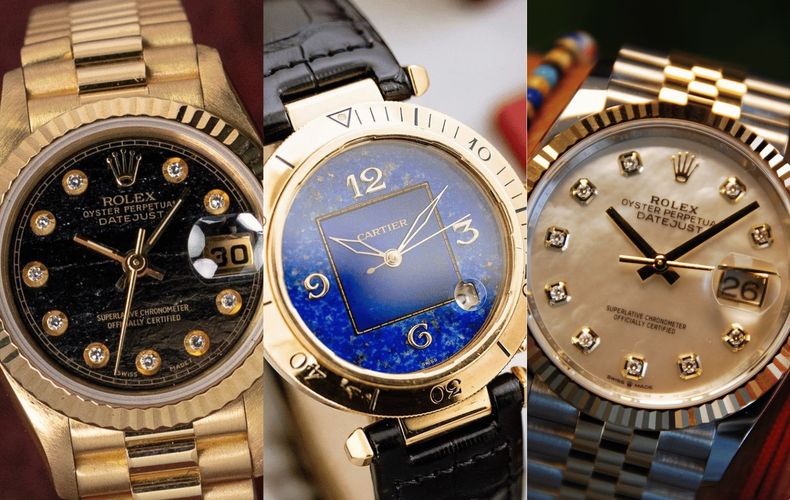
And how about a full gold watch, does it patinate? They do, even New-Old-Stock yellow gold Rolex Day-Dates show subtle patina in the bracelet and case over time. The same for silver watches.

Patina forms differently on each component. Dials fade due to UV exposure. Cases oxidize or accumulate micro scratches. Lume shifts color as luminous compounds age chemically. Bezels fade as pigments degrade. Leather straps darken and soften due to oils and friction. Leather patina is often considered desirable because it adds richness and comfort.

Can You Prevent or Control Watch Patina?

Patina can be slowed by limiting sunlight, moisture, sweat, and heat. Controlled storage significantly reduces color changes. Modern watch materials already resist patina by design. Polishing a patinated watch is discouraged because it removes metal and eliminates original surfaces. Polishing can decrease value, especially on vintage watches. Cleaning patinated watches requires gentle care. Use a good watch cleaning kit with mild soap and water on cases. Never touch dials or lume because these surfaces are fragile. Watch cleaning has to be done properly.

How to Encourage Patina Naturally Without Damaging the Watch?

Bronze watches patinate faster when worn regularly and exposed to moderate humidity or saltwater. Allowing patina to form naturally keeps results authentic. Natural patina develops gradually. Artificial patina created with chemicals or forced exposure often looks uniform or abrupt. Artificial aging can reduce value because it lacks organic development. There are examples in the watch world where patina is artificially accelerated, for instance by placing dials in direct sunlight at high altitude to force warm discoloration or by treating aluminum bezels with bleach to create a prematurely faded effect.

Real World Examples: Watches with Beautiful Patina

Examples of attractive patina include tropical dial Rolex Submariners and Daytonas, chocolate dial Speedmasters, faded bezel GMT Masters, spider dial Rolex sports models, early Panerai divers with radium burn, and Heuer Autavias with sepia toned subdials. Good patina is even and visually balanced. Bad patina is blotchy, excessively dark, or clearly the result of moisture damage.

FAQ’s about Patina

Does modern Super LumiNova develop patina?

No, it is formulated to remain color stable over time.

Can stainless steel patinate?

Yes, but only through subtle surface softening or micro abrasion.

Is tropical patina on watch dials predictable?

No, it depends on pigments, storage, UV exposure, and environmental factors.

Can humidity create desirable patina?

It can contribute to fading but high humidity more often causes spotting or damage.

Should a patinated dial be restored?

Only when structural integrity is at risk. Cosmetic restoration reduces originality and value.

Final word

Patina tells the story of how a watch has lived, whether through decades of daily wear, gentle aging in stable conditions, or the unpredictable effects of time and environment. Understanding patina helps collectors of vintage watches appreciate the individuality and history of each piece. Whether you favor clean, preserved examples or richly aged watches with character, recognizing the difference between natural aging, desirable patina, and true damage ensures you can judge a watch on its merits and enjoy it for what it has become. Are you a fan of patina?

Wristler

Keep track on luxury watch trends & releases

  • First access to exclusive watches on Wristler
  • What to consider for your purchase
  • Latest watch trend reports

Copy the link below to click one of the platforms below.

  • 100% Authentic watches
  • Safe delivery or pick-up
  • Warranty & easy returns