 100% Authentic watches
 Safe delivery or pick-up
 Warranty & easy returns





Vacheron Constantin Patrimony








- 100% Authentic watches
- Safe delivery or pick-up
- Warranty and easy returns








- 100% Authentic watches
- Safe delivery or pick-up
- Warranty and easy returns



We’ll keep
an eye on it
We’ll notify you of new matches
Vacheron Constantin Patrimony
If you ask Vacheron Constantin to define purity, it points to the Patrimony. Launched in 2004 and inspired by the brand’s discreetly elegant 1950s pieces, the collection distills high horology into a clean, confident dress watch. It is slim. It is serene. It slips under a cuff without asking permission, then rewards a second look with nuance you only notice when you slow down.
Within the Vacheron Constantin portfolio, Patrimony is the modern classicist, the one that speaks softly while the sportier lines do the shouting. We see it as a litmus test for taste. You appreciate balance, proportion, and finishing, or you do not. If you do, this is your lane.
Design identity, pared back to essentials
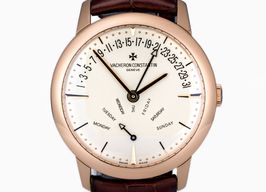
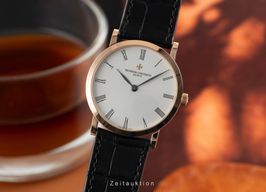
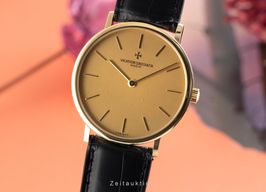
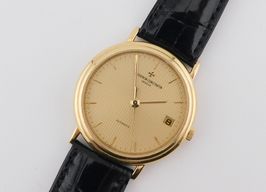
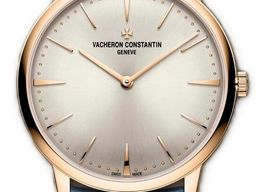
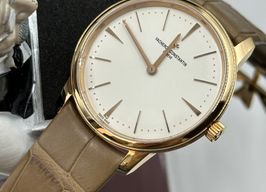
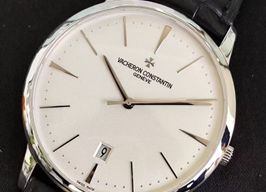
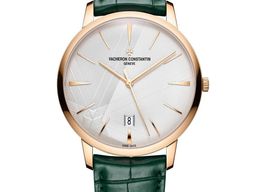
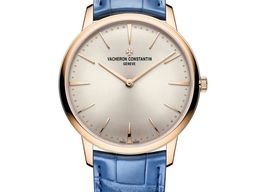
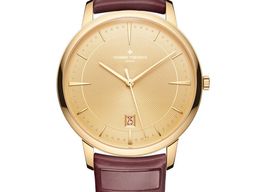
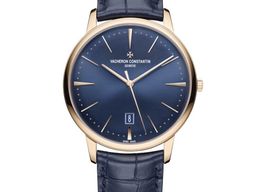
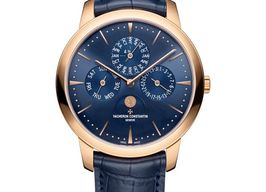
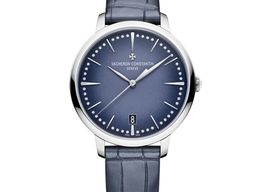
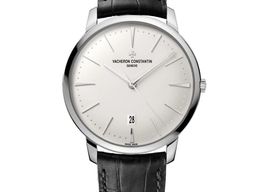
Patrimony is a dress watch first, full stop. The dial has a gentle dome that echoes mid-century pieces. The minute track is a string of discreet dots, precise but never loud. Applied baton markers keep things clean, and dauphine hands bring just enough crispness. The bezel is narrow, the case svelte, the profile unflashy from the front and quietly sculpted from the side. Many models use a sapphire case back, so the movement becomes part of the conversation.
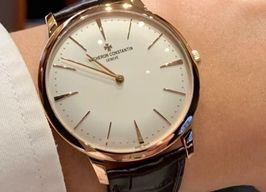
On the wrist, that restraint pays dividends. It reads formal with a suit, still feels right at a gallery opening, and does not compete with a cufflink. This is minimalism with intention, not austerity for its own sake.
What you can expect across the collection
- Materials: 18k gold in pink, white, or yellow, plus platinum on select references.
- Sizes: compact to contemporary, generally mid-30s to low-40s millimeters, with ultra-thin pieces pushing height to elegant lows.
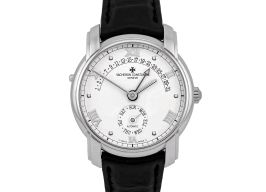
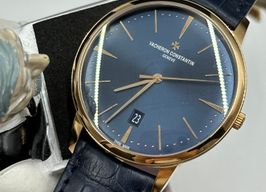
- Dials: opaline or sunburst tones in silver, gray, blue, and deeper hues; occasional guilloché; diamond hour markers on select smaller models.
- Bracelets: traditionally alligator leather straps with pin or folding clasps; no integrated bracelet by design.
- Crystal and back: sapphire up top, and on many models a sapphire display back to view the movement.
Movements and finishing
The Patrimony family runs on in-house manual-winding and automatic calibers, including ultra-thin architectures that keep height down and elegance up. The winding feel is deliberately smooth, the rotor work on automatics carefully executed, and the bridges finished to a level you expect from Geneva’s oldest watchmaker. Many references bear the Geneva Seal, the Poinçon de Genève, a mark of origin and finishing quality that rewards a loupe and good light.
Whether you prefer the ritual of hand-winding or the convenience of an automatic, the core idea stays the same: stability, precision, and refinement that is visible without shouting about it.
Complications within the line
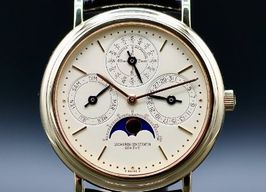
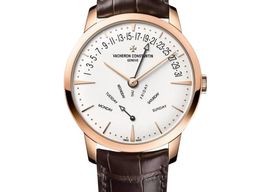
Patrimony starts with time-only pieces, then layers complications that fit the design language. The retrograde date and retrograde day-date models highlight Vacheron Constantin’s technical playfulness without clutter. Perpetual calendars appear in ultra-thin form, readable and beautifully balanced. There is also a moon phase with a retrograde date, a crowd-pleaser that feels poetic rather than busy. At the apex, select ultra-thin minute repeaters prove the line can do serious music while staying impossibly slim. Small seconds and discreet date displays round out the more understated options.
What makes these popular is that each complication respects the dial’s negative space. Nothing feels stacked on. Everything is drawn into the same quiet circle.
Pricing and positioning
New, simple three-hand or date models typically sit in the €20.000 to €30.000 bracket depending on metal and size. Retrograde displays and moon phase pieces usually climb into roughly €45.000 to €70.000 territory, again influenced by material and dial execution. Perpetual calendars in ultra-thin form often start around €80.000 and can run higher in platinum. Minute repeaters live in high-complication pricing: think several hundred thousand euros. On the pre-owned side, earlier sizes and classic manual-wind references offer a comparatively accessible entry, with condition, completeness, and dial color driving the spread.
Why the deltas? Precious metals, movement complexity, and the degree of hand finishing. Platinum and high complications command a premium. Clean time-only gold pieces, especially in pink gold, tend to be the sweet spot for daily elegance.
Popular references collectors mention
- Ref. 81180, Patrimony Manual-Winding: the archetypal three-hander with a slim case and domed dial.
- Ref. 85180, Patrimony Automatic Date: classic date at 6 and a refined rotor view on the back.
- Ref. 86020, Patrimony Retrograde Day-Date: fan-shaped displays that add theater while keeping symmetry.
- Patrimony Perpetual Calendar Ultra-Thin: various references across gold and platinum, prized for balance and height.
Who it is for, and why it endures
Looking for a dress watch that looks as considered as your tailoring? The Patrimony rewards that sensibility. It is known for its slim profile, minimalist design, and quiet confidence. It feels modern because it never tries too hard, and it carries the weight of Vacheron Constantin heritage without leaning on it. In a collection full of statement pieces, this is the one that signals you have nothing to prove.
That is why the line continues to attract collectors, professionals, and design purists. You get elegance, craftsmanship, and a level of precision that holds up under scrutiny. And you get a watch that will still look right when fashion changes its mind again.